Best Surfing Camps for Beginners: The Structural Curricular Guide
The acquisition of foundational ocean literacy remains one of the most mechanically complex endeavors a novice athlete can undertake. Historically, entry into the sport occurred through an unguided process of trial and error. This hazardous method exposed uncoached participants to unpredictable marine environments, inadequate equipment volumes, and poorly understood coastal currents. As a result, early experiences were frequently defined by rapid physical exhaustion, minor trauma, or complete abandonment of the discipline.
The modern stabilization of global surf tourism has fundamentally transformed this learning curve. Dedicated instructional properties now exist along every major temperate and tropical coastline. These facilities aim to standardize the process of athletic progression by bundling accommodations, equipment access, and group coaching. However, this commercial expansion has created a highly fragmented marketplace. Itineraries are frequently designed around recreational hospitality rather than rigorous, safety-focused physical education.
To achieve genuine competence and safety in the ocean, a novice must look past superficial resort marketing. Finding an effective entry-level program requires a systematic analysis of localized hydrodynamics, instructional design, and risk-mitigation infrastructure. A misaligned choice can result in sub-optimal muscle memory, high frustration levels, or unnecessary physical exposure. This analytical document establishes a permanent reference framework for evaluating foundational surf training ecosystems.
Understanding “best surfing camps for beginners”
Identifying the best surfing camps for beginners requires a total rejection of subjective travel metrics. A premier foundational facility must be evaluated as an integrated sports academy, an environmental management system, and an active risk-mitigation network. True excellence is defined by a property’s ability to minimize environmental anxiety while maximizing structured, repeatable physical practice.
The Hazards of Mixed-Skill Lineups
A common point of operational failure occurs when a facility mixes absolute beginners with high-performance surfers in the same wave zone. This cross-contamination creates severe anxiety for the novice, who must constantly dodge faster, more aggressive wave riders.
The best surfing camps for beginners explicitly avoid this issue by operating in geographically isolated zones. These dedicated learning areas feature consistent white-water rollers and are completely separated from advanced, crowded point breaks.
Bathymetry and Substrate Security
The physical nature of the ocean floor determines both wave shapes and the consequences of falling. Novices require a uniform, gently sloping sand profile that allows them to stand comfortably between wave sets.
When a program operates over jagged rock or shallow coral, the physical stakes rise to an unacceptable level. A true entry-level environment must prioritize bathymetric safety to ensure that mistakes result only in soft tumbles rather than lacerations.
Deconstructing Hospitality-First Formats
Many commercial operators use premium lifestyle amenities to mask deficiencies in their actual coaching curriculum. High-end infinity pools, organic dining options, and organized social events frequently disguise high student-to-coach ratios.
An authentic foundational training system must prioritize pedagogical density over luxury hospitality. The true value of a program rests in its structured in-water feedback, formal video analysis, and dry-land biomechanical drills.
The Evolution of Entry-Level Ocean Pedagogy
Organized surf instruction grew out of the casual, self-directed beach cultures of the mid-twentieth century. Early learning models relied entirely on informal mimicry and uncalibrated equipment. Novices typically borrowed heavy, unmanageable fiberglass boards that lacked sufficient flotation and stability for a beginner’s frame. These early participants entered raw, unprotected coastlines without any understanding of rip currents, lateral drifts, or lineup etiquette.
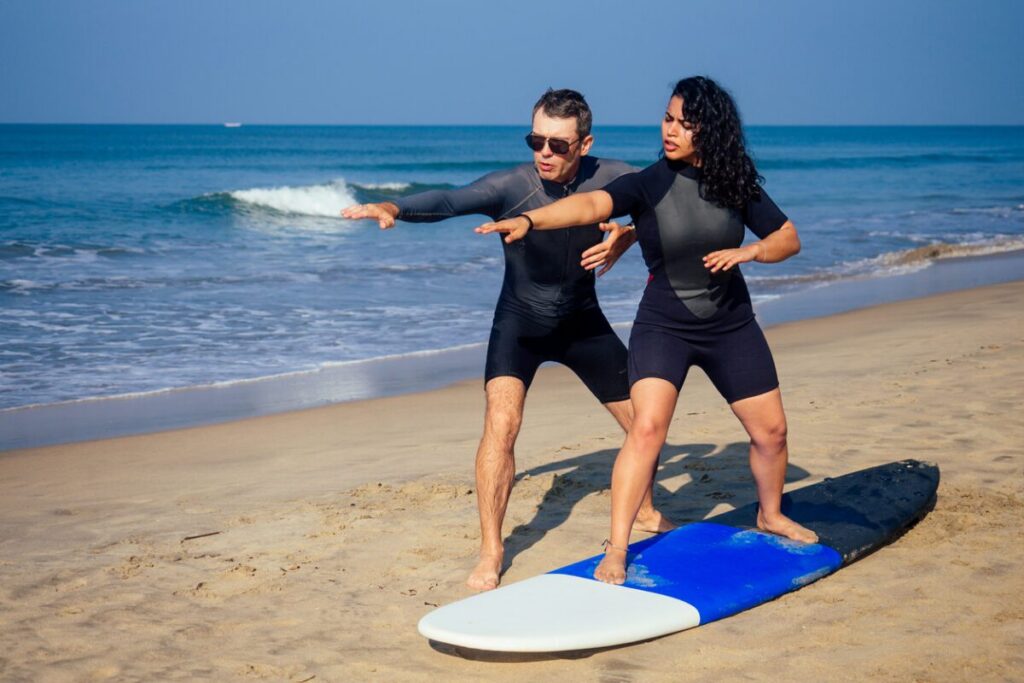
By the late 1990s, the introduction of soft-skinned, expanded polystyrene surfboards revolutionized the instructional landscape. These flexible, high-volume designs drastically reduced impact injuries while providing excellent paddling stability. This technological shift allowed commercial operators to establish the first formal surf schools along highly accessible, sandy coastlines.
Institutional Regulation and Certification
The 2010s brought a wave of institutional regulation across major surf tourism regions. National governing bodies and international lifesaving associations introduced mandatory coaching credentials. These certifications forced operators to standardize their safety protocols, emergency responses, and wave-selection methods.
This professionalization transformed surf camps from casual lodging houses into structured athletic academies. It established clear boundaries between recreational beach rentals and genuine educational systems.
Digital Tracking and Forecasting Integration
The modern era uses advanced meteorological forecasting and digital analysis tools to optimize student placement. Coaches no longer guess which beach will offer the safest waves each morning.
Instead, they analyze real-time satellite buoy data, wind models, and local tidal movements. This technological precision ensures that beginners are deployed only when wind and wave conditions match their physical capabilities.
Environmental Models and Progress Frameworks
Evaluating beginner programs requires objective mental models to assess how effectively a camp manages environmental variables. These frameworks help eliminate emotional bias during the selection process.
The Hydrographic Comfort and Challenge Matrix
This matrix plots the raw physical power of local waves against a beginner’s physical fitness and water confidence. It isolates four clear operational zones:
-
Accelerated Foundation Zone: Sheltered sandbars provide constant, uniform white-water rollers paired with close, professional supervision.
-
Hazardous Refraction Zone: High-velocity shorebreaks create severe impact risks and cause rapid muscle fatigue for unconditioned novices.
-
Stagnant Amenity Hub Zone: Flat tidal lagoons provide excellent safety but offer zero wave movement for actual progression.
-
Uncontrolled Panic Reef Zone: High swell energy over shallow reef structures creates extreme anxiety and elevates injury risks.
The Kinesthetic Volume Formula
This formula tracks the true physical efficiency of an instructional session. It measures active skill practice against total time spent navigating environmental obstacles:
Low ratios point to camps that utilize poor geographic locations or overly challenging wave zones. Superior properties maximize this metric by selecting uniform, waist-deep sandbars that allow continuous, repeatable practice.
The Curricular Density Spectrum
This spectrum classifies properties based on the depth of their educational framework. It separates casual holiday setups from highly organized athletic academies.
-
Recreational/Low-Density: Instruction is limited to a brief, ten-minute beach talk followed by unguided water time. Coaches provide basic encouragement but offer little technical analysis.
-
Pedagogical/High-Density: The curriculum combines in-water coaching with dry-land simulators, video review, and oceanography lectures. Every movement pattern is recorded, broken down, and corrected systematically.
Classification of Beginner Instructional Habitats
The beginner surf travel market contains several distinct operational styles. Each model features unique trade-offs regarding safety, budget, and learning efficiency that travelers must carefully evaluate.
Dedicated Technical Surf Academies
These highly focused facilities operate like intensive athletic training bootcamps. They utilize fixed-date, week-long programs designed exclusively to take absolute beginners to independent intermediate status. The daily schedule includes high-definition video analysis, pool paddle clinics, and surf-skate movement training.
-
Trade-offs: They provide rapid, measurable improvements in ocean confidence and pop-up mechanics. However, the rigorous schedule can cause severe physical fatigue, leaving little time for traditional relaxation.
All-Inclusive Hospitality Resorts
These upscale properties target families and luxury travelers by combining basic surf lessons with premium accommodations. They feature private villas, gourmet dining, and spa facilities, treating surf instruction as one of many optional daily activities.
-
Trade-offs: They provide exceptional comfort, flexible daily scheduling, and high-end amenities. However, the surf instruction often lacks technical depth, and the equipment fleets may not be updated regularly.
Wilderness Eco-Training Outposts
Located in isolated regions like rural Central America or northern Scandinavia, these properties focus on environmental immersion. They offer off-grid solar accommodations, organic local meals, and direct access to uncrowded coastal ecosystems.
-
Trade-offs: They provide quiet learning environments free from crowded city lineups. However, travelers must accept basic amenities, limited internet connectivity, and long, multi-stage travel routes.
Social Backpacker Hubs
Popular across Western Europe and Australia, these operations combine high-density hostel accommodations with large-scale surf schools. They feature lively communal bars, shared kitchens, and organized evening entertainment.
-
Trade-offs: They provide an affordable entry point and a highly social environment for solo travelers. However, large class sizes often result in generic feedback and crowded transport vans.
Structural Comparison Matrix
Selection Logic Blueprint
Choosing the right operational style requires an honest assessment of your personal learning goals. A traveler who wants to learn independent ocean safety skills should prioritize a technical academy over a luxury resort.
Conversely, individuals looking for a balanced vacation with casual water time will get the most value from an all-inclusive hospitality resort. Budget-conscious solo travelers who value social interaction over technical precision will find social hubs to be a practical fit.
Operational Scenarios and Educational Outcomes
Examining real-world case studies highlights how different traveler profiles interact with various camp structures. These scenarios illustrate the practical trade-offs and long-term results of these choices.
Case 1: The Office-Bound Novice
-
Context: A 29-year-old software engineer with excellent swimming pool stamina but zero experience navigating open ocean waves or currents. They have a one-week vacation window and expect clear, safety-focused instruction.
-
Constraints: Moderate budget, high initial ocean anxiety, and a clear need for high-volume, forgiving equipment.
-
The Incompatible Choice: A social backpacker hub located next to a heavy, shore-break beach. Large group sizes and chaotic lineups increase their anxiety, leading to a complete stall in progress.
-
The Optimal Choice: A technical surf academy operating on a sheltered, shallow sandbar with a strict 1:4 instructor ratio.
-
Second-Order Effects: Small class sizes and close supervision quickly lower the engineer’s environmental anxiety, helping them master basic pop-up mechanics by day three.
Case 2: The Mature Solo Traveler
-
Context: A 48-year-old business consultant wants to learn to surf during a two-week career break. They value private accommodations, quiet evenings, and highly customized coaching.
-
Constraints: High budget, a preference for low-density lineups, and a need for excellent physical recovery options.
-
The Incompatible Choice: A high-density social hub with shared dorms and loud evening parties. The lack of restful sleep slows down their physical recovery, increasing their injury risk during morning sessions.
-
The Optimal Choice: An all-inclusive hospitality resort that offers private, one-on-one guiding and premium recovery amenities.
-
Second-Order Effects: Private coaching allows the instructor to adjust the lessons to the consultant’s exact energy levels, ensuring safe progress without over-exertion.
Case 3: The Aquatic Cross-Over Athlete
-
Context: A 22-year-old competitive snowboarder possesses exceptional balance and leg strength but lacks experience reading ocean swells and paddle timing.
-
Constraints: Limited budget, high physical endurance, and a desire to progress rapidly to riding unbroken waves.
-
The Incompatible Choice: A recreational resort package where the surf sessions are limited to short, basic white-water lessons once a day.
-
The Optimal Choice: An intensive technical academy that utilizes daily video reviews and surf-skate training on land.
-
Second-Order Effects: The athlete’s existing balance combined with advanced video feedback allows them to quickly skip white-water drills and move to open wave faces by the end of week one.
Financial Architecture and Full Fiscal Modeling
The advertised price of a beginner surf package rarely reflects the total cost of the trip. Consumers must analyze line-item expenses carefully to avoid unexpected costs that can strain their travel budget.
Equipment Maintenance and Liability Policies
Novice surfers frequently damage equipment by dropping boards on rocks or colliding with other beginners in the water. Many cheap packages exclude board insurance from their base pricing.
If a guest breaks a fin box or creases a soft-top board, they can face unexpected replacement fees. Travelers should verify whether a camp includes full equipment insurance in its upfront costs.
Transport Logistics and Spot Surcharges
Some low-cost operations include surf lessons in their base price but charge extra for daily transportation. If the local beach lacks good waves, the camp may charge additional fuel fees to drive students to better spots.
These daily transport surcharges can accumulate rapidly over a multi-week stay. Choosing a beachfront facility avoids these hidden fees entirely.
Real-World Cost Architecture Matrix
The Real Cost of Large Group Classes
Choosing a low-cost camp with large group classes often introduces a major hidden cost in the form of wasted time. In a class with ten students per instructor, a beginner receives only a few minutes of direct attention each session.
This lack of guidance can lead to building poor muscle memory that takes months to correct later. Spending more on a program with small classes is often a much more efficient use of your time and capital.
Technological Tools and Technical Training Systems
Premium entry-level programs use modern training technology to help students build correct muscle memory safely. These systems speed up the learning curve and help beginners overcome physical plateaus on land.
Precision Videography and Frame Analysis
Novice surfers usually have an inaccurate mental picture of their actual body positions while riding a wave. They may feel like they are standing with a straight back and bent knees when they are actually bending forward from the waist.
Advanced camps position videographers on the beach to record every wave a student attempts. During evening review sessions, coaches use slow-motion analysis to break down these movements. This visual feedback shows students exactly where their foot placement or posture needs adjustment.
Land-Based Surf Simulators
Surf-skate boards feature specialized front trucks that mimic the turning sensations of a surfboard. On a real wave, a beginner might get only a few seconds of riding time per session. This brevity makes it difficult to build new muscle memory.
By practicing on smooth concrete tracks, coaches can guide students through dozens of continuous turns. This land training helps beginners master core movements, like shoulder rotation and knee compression, in a controlled environment.
Real-Time Audio Coaching
Some top-tier academies use waterproof two-way radio helmets to coach students in real time. Instead of waiting until they return to the beach for feedback, beginners receive immediate adjustments while paddling or catching a wave.
This instant coaching helps students correct their paddle angles, adjust their stance mid-wave, and stay safe in changing conditions. This immediate feedback loop speeds up the learning process significantly.
Risk Taxonomies and Emergency Infrastructure
Surfing involves inherent physical risks, including strong ocean currents, marine life encounters, sharp reefs, and collisions with heavy surfboards. A surf camp’s safety infrastructure is just as important as its coaching quality.
Coach Certifications and Supervision Ratios
Consumers should check if a camp’s instructors hold valid certifications from recognized organizations. These include the International Surfing Association (ISA) or national lifesaving bodies.
These certifications ensure coaches are trained in open-water rescue and basic life support. Furthermore, camps should maintain strict instructor-to-student ratios to ensure proper supervision in changing ocean conditions.
Medical Evacuation Infrastructure
For camps located in remote areas, a detailed medical emergency plan is essential. Guests should ask camps specific questions before booking:
-
What emergency trauma gear is kept on the surf boats and in the beach vehicles?
-
How long does it take to reach the nearest hospital with a trauma center or decompression chamber?
-
Does the camp maintain satellite communication tools in areas without cellular service?
Gear Integrity and Board Design
For beginner groups, camps should use soft-top surfboards fitted with flexible rubber fins. These boards significantly reduce the risk of cuts and bruises during wipeouts.
Advanced camps should inspect their leash strings and fin boxes regularly. Equipment failure in large surf can quickly turn a routine session into a dangerous situation.
Long-Term Adaptive Planning and Maintenance Cycles
Executing an effective training plan requires continuous adjustment based on real-time feedback. A static itinerary that ignores accumulated fatigue or changing weather patterns will eventually fail.
Managing Physical Fatigue
Intensive ocean training places severe physical demands on the human body. Surfers must manage muscle fatigue, sunburn, and minor injuries to prevent long-term strain.
Top-tier operations build regular rest days and recovery sessions into their multi-week blueprints. This approach ensures that participants maintain high energy levels and sharp focus during critical training windows.
Adapting to Seasonal Swell Cycles
Global surf destinations experience dramatic changes in wave sizes and wind directions throughout the year. A location that offers perfect beginner waves in May might feature dangerously large surf in August.
When planning an itinerary, travelers must carefully match their skill level with the specific season of their chosen destination. This alignment maximizes available water time and reduces the risk of encountering un-surfable conditions.
Step-by-Step Selection Assessment Checklist
-
Verify Instructor Certifications: Confirm that all coaching staff hold valid ISA or equivalent lifesaving credentials.
-
Review Emergency Equipment: Ensure that every transport vehicle and boat carries a comprehensive first aid kit and oxygen tank.
-
Analyze Medical Evacuation Protocols: Check the camp’s written plans for emergency transport from remote surf breaks to regional hospitals.
-
Audit Total Pricing Terms: Check for hidden fees, such as boat fuel surcharges, marine park taxes, or board repair liabilities.
-
Inspect Surfboard Inventory: Confirm the rental fleet includes a wide variety of board shapes and volumes to match changing wave sizes.
-
Evaluate Sustainability Practices: Check if the property utilizes renewable energy, monitors waste water, and employs local staff at fair wages.
Metric Frameworks and Technical Progression Tracking
A premium surf program should provide structured ways to track a guest’s improvement over time. Without clear milestones, a surf trip can easily turn into a casual vacation without any real skill development.
Quantitative Metrics
To measure progress accurately, coaches look at specific numbers during a week-long stay:
-
Wave Capture Efficiency: The percentage of waves paddled for that the guest successfully catches.
-
Pop-Up Transition Time: The time it takes from the moment the board matches the wave’s speed to when the rider stands up.
-
Takeoff Position Accuracy: How well the surfer stays in the peak takeoff zone without drifting out of position.
Qualitative Milestones
Qualitative tracking focuses on the mechanics of a surfer’s style and their decision-making in the water:
-
Line of Sight: Checking if the surfer looks down at their board or down the line toward the open wave face.
-
Functional Compression: Evaluating how well the surfer bends their knees to absorb bounce and maintain speed through turns.
-
Lineup Etiquette Awareness: Assessing how safely the surfer navigates busy lineups and respects standard right-of-way rules.
Deconstruction of Foundational Industry Myths
The entry-level surf travel market is full of persistent myths that can mislead beginners. Debunking these common misconceptions helps consumers set realistic expectations for their trip.
Myth 1: Premium Accommodations Guarantee Elite Coaching Staff
Many travelers assume that ultra-expensive resorts automatically offer the best instruction available. In reality, high-end pricing usually reflects luxury accommodations, fine dining, and secluded locations. The actual surf coaching at a luxury resort may be very casual.
Conversely, a mid-priced, dedicated technique clinic might offer far superior coaching tools, better video analysis, and highly certified instructors.
Myth 2: Tropical Reef Breaks are Forgiving Learning Environments
The travel industry loves to feature images of beginners riding warm, crystal-clear tropical waves. However, many of these waves break over sharp, shallow coral reefs that pose real safety risks. A simple fall can result in painful coral cuts or sea urchin punctures.
For absolute beginners, cooler-water beach breaks with soft sand bottoms are often much safer and more forgiving places to learn.
Myth 3: Absolute Competence Can Be Realized in Seven Days
Surf camp advertisements often promise to transform absolute beginners into confident surfers in just seven days. This is highly unrealistic given the steep learning curve of the sport.
A one-week camp can teach you proper paddle mechanics, basic safety rules, and the mechanics of a clean pop-up. However, mastering wave selection, timing, and complex turns takes months or years of consistent practice.
Myth 4: Group Class Densities Do Not Limit Progression Rates
Some lower-cost camps save money by sending large groups of eight to ten students out with a single instructor. These crowded classes make it difficult for students to get personalized feedback or stay safe.
A high instructor-to-student ratio ensures that your coach can watch every wave you catch, point out technical mistakes immediately, and help you navigate the lineup safely.
Myth 5: High-Quality Waves Demand Long Global Transit Routes
Many surfers believe they need to fly to isolated islands in the middle of the ocean to find high-quality waves. While remote destinations offer incredible setups, they also come with difficult travel logistics and limited medical care.
Many world-class surf regions sit right along accessible coastlines in countries like Portugal, Spain, Morocco, and parts of Central America. These destinations offer exceptional waves alongside modern infrastructure and easy travel options.
Myth 6: Any Highly Skilled Wave Rider Can Coach Effectively
Many camps hire local or international surfers based solely on their riding ability. However, being an elite surfer does not automatically make someone a good teacher.
Effective coaching requires patience, communication skills, and an understanding of biomechanics. It takes a structured approach to break down complex movements for a frustrated student, which is why formal instructor certifications matter so much.
Myth 7: Purchasing Advanced Shortboards Early Accelerates Progress
Beginners often rush out to buy a shiny new shortboard before heading to a camp. This frequently leads to purchasing a board that is too small, thin, or advanced for their current skill level, which slows down their progress.
The smartest approach is to use the camp’s rental fleet. This allows you to test different board shapes and volumes under the guidance of your coaches, helping you find the right fit before investing in your own equipment.
Synthesis and Strategic Judgment
Selecting an entry-level surf training system requires balancing your personal physical capabilities with a camp’s operational realities. Beginners must look past superficial luxury amenities and focus entirely on structural metrics: bathymetric security, low coaching ratios, verified safety certifications, and adaptive equipment fleets.
Prioritizing these core metrics protects your financial investment and ensures steady, safe progress in the ocean. By using a disciplined, data-driven approach to evaluate your options, you can select a program that builds a solid foundation for your long-term surfing journey.