Prevention Matrix: How to Avoid Surfing Camps Injuries Completely
The expansion of global surf tourism has democratized access to the world’s coastlines. Commercial surf camps now draw thousands of eager, unconditioned travelers into complex marine ecosystems every week. This massive influx of recreational athletes has fundamentally altered the risk profile of coastal sports medicine. While specialized resorts promise rapid skill acquisition, they often downplay the intense physical demands of real ocean waves.
When participants enter the surf zone without proper conditioning or ocean literacy, the likelihood of physical trauma escalates dramatically. The ocean environment features unique hazards, including shifting sandbars, hidden coral heads, and heavy, moving surfboards. These factors turn minor technical errors into acute physical incidents very quickly. The resulting trauma ranges from simple soft-tissue lacerations to complex musculoskeletal injuries and severe spinal impacts.
Preventing these incidents requires a total shift from reactive treatment to proactive risk mitigation. Travelers must learn to evaluate their physical limitations, inspect training gear, and read local hydrodynamics analytically. This comprehensive reference work establishes an objective framework for minimizing structural, behavioral, and environmental hazards during intensive training weeks.
Understanding “how to avoid surfing camps injuries”
Minimizing physical risk during an intensive training holiday requires looking past superficial marketing imagery. True safety demands a systematic understanding of how human biomechanics, training equipment, and local hydrodynamics interact. Most recreational travelers mistakenly view safety simply as listening to a brief beach lecture before entering the water. This oversimplification completely ignores how cumulative muscle fatigue, hidden bathymetric hazards, and poor group positioning compromise personal security.
The Vulnerability of Unconditioned Muscle Groups
An authentic strategy for how to avoid surfing camps injuries begins long before your feet touch the sand. Surfing requires a unique combination of upper-body endurance, explosive core power, and dynamic joint stability.
When office-bound travelers transition suddenly to five hours of daily paddling, their muscles fatigue rapidly. This physical depletion compromises proper technique, leaving the lower back, shoulders, and knees highly vulnerable to acute strain.
The Dynamics of Board-to-Body Impact Risks
The primary source of physical trauma in beginner lineups is the surfboard itself. Heavy, high-volume soft-tops become dangerous projectiles when caught in powerful white-water rollers.
Learning how to plan an injury-free trip means mastering the art of safe equipment disposal. Beginners must be trained to push their boards away safely during wipeouts and protect their heads whenever surfacing.
Managing Group Density and Lineup Chaos
Commercial operators frequently crowd multiple student groups into the same small white-water zone. This high density creates a chaotic learning environment where out-of-control boards constantly threaten nearby swimmers.
Understanding how to avoid surfing camps injuries requires choosing facilities that enforce low student-to-coach ratios. Strict spacing protocols keep participants separated, preventing dangerous mid-water collisions.
Deep Contextual Background
Organized surf travel has transitioned from an unregulated subculture into a highly commercialized global industry. In the early days of coastal tourism, participants accepted injuries as an unavoidable part of exploring remote waves. Early medical documentation from the 1970s shows high rates of deep reef lacerations and facial impacts. These incidents were caused by heavy, un-tethered fiberglass boards and a complete lack of protective headgear.
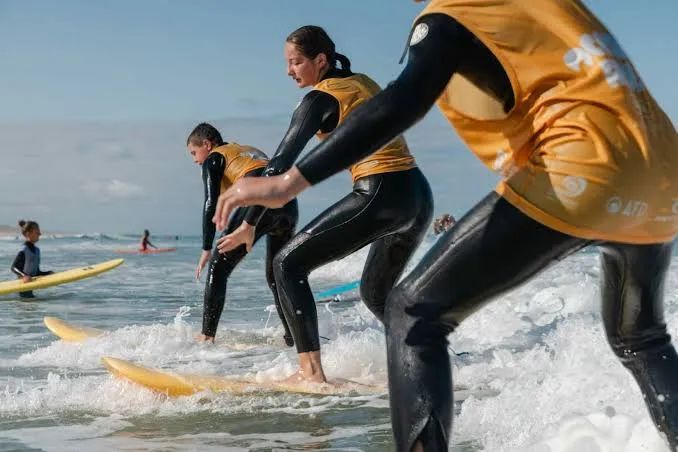
The introduction of urethane ankle leashes and soft-skinned foam surfboards in the late twentieth century drastically reduced basic impact trauma. These innovations allowed commercial operators to build mass-market surf schools on public beaches. This commercial expansion made the sport accessible to the general public but created a new set of operational safety challenges.
The Standard of Professional Coaching Credentials
By the late 2010s, international governing bodies introduced mandatory safety certifications for commercial coaching staffs. These frameworks forced operators to standardize their in-water communication, group management, and first-aid response systems.
This professionalization established clear boundaries between casual surfboard rental stands and structured athletic academies. It provided a reliable foundation for systematic risk management in the sport.
The Integration of Modern Predictive Technology
Modern risk mitigation utilizes advanced satellite forecasting and digital movement tracking to keep students safe. Instructors no longer rely on guesswork to evaluate changing beach conditions each morning.
Instead, they analyze real-time buoy data, tide charts, and wind models to select the safest training zones. This data-driven approach ensures that novices enter the water only when environmental conditions match their physical capabilities.
Conceptual Frameworks and Mental Models
Using objective mental models allows travelers to evaluate environmental and behavioral risks clearly. These frameworks help eliminate emotional excitement, allowing for rational decision-making in the ocean.
The Environmental Energy and Human Capability Matrix
This matrix contrasts the raw physical power of coastal wave systems against an individual’s swimming stamina and ocean confidence. It defines four distinct operational risk zones:
-
Optimized Safe Repetition Zone: Sheltered sandbars provide uniform white-water rollers paired with close, certified supervision.
-
Hazardous Refraction Zone: High-velocity rip currents create severe drowning risks and cause rapid muscle fatigue for unconditioned swimmers.
-
Stagnant Comfort Hub Zone: Calm tidal lagoons offer excellent physical safety but provide zero wave energy for actual skill progression.
-
High-Exposure Trauma Zone: Heavy shorebreaks over shallow rock formations create extreme impact risks and elevate the chance of severe injuries.
The Cumulative Fatigue Threshold Formula
This formula tracks how physical exhaustion increases a student’s vulnerability to acute joint injuries over a multi-day training trip:
When daily rest and hydration fall behind physical exertion, coordination drops quickly, and your injury risk rises. This calculation helps coaches and students plan mandatory recovery windows before performance suffers.
The Tactical Spatial Separation Spectrum
This safety spectrum classifies training environments based on crowd density and group coordination. It helps travelers avoid high-risk, chaotic beach zones.
-
Regulated/Low-Density: Features private peaks, strict student spacing, and clear communication channels. This model keeps collisions near zero.
-
Unregulated/High-Density: Combines crowded public lineups, uncertified renters, and mixed skill levels, creating a high risk of board-to-body impacts.
Classifying Common Traumatic Ocean Mechanisms
Direct Surfboard Impact Traumas
The single most common source of trauma in recreational lineups is direct impact from a surfboard. Novices often lose control of their high-volume boards when hit by unexpected waves, turning them into dangerous projectiles.
These loose boards can strike nearby swimmers, causing deep lacerations, broken bones, or severe facial injuries. Preventing these impacts requires constant situational awareness and strict group spacing protocols.
Bathymetric Collisions and Spinal Extensions
Wiping out in shallow water poses a major threat to the head and spine. When a surfer falls forward into a shallow sandbar, the wave’s power can drive them directly into the bottom.
This impact can compress the cervical spine or hyperextend the neck, risking permanent neurological damage. Surfers must train themselves to fall flat and protect their head with their arms during every wipeout.
Overuse Biomechanical Strains
The repetitive motion of paddling places extreme stress on the shoulders, neck, and lower back. Unconditioned surfers often arch their lower backs excessively to keep their heads up, causing painful muscle spasms.
Additionally, repetitive paddling without proper shoulder stabilization can lead to painful rotator cuff impingement. Building baseline core strength and shoulder mobility before your trip is vital for preventing these overuse injuries.
Environmental Safety Comparison Matrix
Comprehensive Substrate Selection Logic
Choosing the right learning environment requires an honest assessment of your personal physical condition. A beginner with poor balance should avoid shallow reef breaks, where any fall can cause painful coral cuts.
Instead, novices should look for uniform sandbar breaks that offer a more forgiving surface for falls and errors. Matching your training environment to your skill level reduces your exposure to unnecessary physical hazards.
Case Analysis and Cascading Failure Cycles
Examining specific real-world scenarios illustrates how small errors can combine to cause severe physical trauma. These case studies highlight the critical importance of proactive risk management.
Case 1: The Fatigued Corporate Traveler
-
Context: A 35-year-old financial analyst joins an intensive, week-long training camp in Central America. They are highly motivated but have done no physical preparation prior to arrival.
-
Progressive Failure: By day four, severe fatigue settles into their upper back and shoulders. Seeking to maximize their water time, they ignore the exhaustion and join a challenging afternoon session.
-
The Incident: Tired shoulders cause them to execute a slow, sloppy pop-up on a steep wave face. Their knee twists awkwardly on the deck, resulting in an acute ACL tear.
-
Second-Order Effects: The injury forces an immediate end to their training, requires expensive international medical transit, and leads to months of rehabilitation.
Case 2: The Tropical Reef Novice
-
Context: A 22-year-old traveler books a low-cost surf package located next to a shallow volcanic reef break. The camp does not provide protective footwear or helmets.
-
Progressive Failure: The traveler paddles out during a low tide when the water over the reef is dangerously shallow. Their coach stays on the beach, leaving the group unsupervised.
-
The Incident: The novice loses balance on a small wave and falls straight down onto the sharp reef floor. They suffer deep lacerations across both feet and legs.
-
Second-Order Effects: Poor wound management leads to a severe bacterial infection, requiring admission to a regional hospital and an expensive round of IV antibiotics.
Case 3: The Chaotic Public Lineup
-
Context: Two friends join a high-density surf school that operates on a crowded public beach break. The school uses large classes with ten students per instructor.
-
Progressive Failure: The instructor fails to maintain proper spacing, allowing multiple students to paddle for the exact same wave.
-
The Incident: One student loses control of their board during takeoff, and it strikes a nearby swimmer directly in the face, causing a severe concussion.
-
Second-Order Effects: The injured swimmer requires immediate emergency ocean rescue, stitches for facial cuts, and a complete ban on physical activity for several weeks.
Fiscal Impacts and Medical Logistics Surcharges
The financial consequences of a surf injury extend far beyond simple first-aid costs. Travelers must understand the full economic impact of managing an emergency medical situation in a foreign country.
Navigating Out-of-Network Emergency Medical Fees
Many popular surf camps operate in remote coastal towns far from modern city hospitals. When a severe injury occurs, patients must be treated at small local clinics or driven long distances to regional trauma centers.
These private medical facilities often require immediate cash payments before admitting a patient or performing surgery. Without comprehensive travel insurance, a single emergency room visit can easily cost thousands of dollars out of pocket.
The True Cost of Last-Minute Travel Changes
Severe injuries like spinal trauma or broken bones often prevent travelers from flying in a standard, cramped economy seat. Patients may need to upgrade to business class or arrange specialized medical transport to keep their injured limbs elevated.
These last-minute flight modifications can introduce massive financial surcharges. This economic strain highlights why specialized sports travel insurance is a non-negotiable requirement for any surf holiday.
Emergency Financial Risk Breakdown
The True Cost of Skipping Quality Care
Choosing a cheap, uncertified surf school often introduces a major hidden cost in the form of poor risk management. Low-cost operations frequently skip safety gear, ignore changing weather hazards, and use under-trained coaches to save money.
When an injury occurs, these sub-standard operations rarely have the tools or training to respond effectively. Spending more on a professional, safety-focused academy protects your health and guards against catastrophic medical expenses.
Preventative Tools and Safety Infrastructure
Premium training programs use specialized equipment and safety gear to protect their students from common in-water injuries. These safety tools help minimize impact trauma and give beginners more confidence in the surf.
Flexible Rubber Safety Fins
Traditional surfboards use stiff fiberglass fins with sharp edges that can cause deep cuts during a collision. Advanced beginner camps replace these dangerous components with flexible rubber safety fins.
These flexible fins bend easily upon impact, significantly reducing the severity of cuts and puncture wounds if a board strikes a swimmer. This simple equipment upgrade eliminates one of the most common sources of trauma in the lineup.
Impact-Resistant Surf Helmets
When training over shallow reefs or in crowded public lineups, protective headgear is an essential safety asset. Modern surf helmets are lightweight, low-profile, and engineered to absorb heavy impacts without filling with water.
Wearing a helmet protects your head from flying surfboards and shallow reef impacts, preventing dangerous concussions and disorienting head trauma. This protection is vital for keeping you safe in unpredictable conditions.
Full-Length Neoprene Guard Layers
Even in warm tropical waters, wearing a thin neoprene rash guard or spring suit provides an important layer of defense. This durable fabric protects your skin from friction rashes, painful jellyfish stings, and minor coral scratches.
By preventing small cuts and skin irritations early in your trip, you significantly lower your risk of developing severe bacterial infections later. This simple choice helps ensure you stay healthy throughout your training week.
Risk Landscape and Failure Modes
Operating a surf training facility involves managing a dynamic mix of environmental, behavioral, and equipment hazards. A camp’s safety program must be built to handle compounding risks before they lead to an emergency.
Compounding Weather and Tide Hazards
A major operational risk occurs when a camp’s schedule ignores changing environmental conditions. A shallow sandbar that provides safe, gentle waves at high tide can turn into a heavy shorebreak at low tide.
If coaches fail to monitor the shifting tides, students can easily be pushed into dangerous shorebreak zones. Camps must adapt their lesson times daily to align with the safest environmental windows.
Inadequate Emergency Response Planning
A camp’s safety program is only as good as its emergency response plan. When a severe injury happens, every second counts, making a clear, practiced action plan essential.
Camps must maintain fully stocked trauma kits, keep working communication tools on hand, and ensure staff are trained in open-water rescue. A failure in any of these areas can turn a manageable injury into a medical crisis.
Sub-Standard Gear Maintenance
Neglecting regular equipment maintenance creates a serious hazard for students in the water. Worn-out leash strings, cracked fin boxes, and waterlogged boards can fail suddenly when stressed by a large wave.
Equipment failure in a large surf zone can quickly leave a beginner stranded and struggling to stay afloat. Professional operations inspect and refresh their gear fleets daily to prevent these mechanical breakdowns.
Governance, Maintenance, and Long-Term Adaptation
A successful safety strategy requires constant monitoring and regular updates based on real-world feedback. A static risk management plan that ignores fresh data will eventually fail to protect its guests.
Continuous Safety Reviews and Audits
Professional training operations conduct structured safety reviews at the end of every week. Coaches meet to document every minor injury, equipment failure, and near-miss that occurred during the training cycles.
Analyzing these minor incidents allows management to find weak spots in their coaching methods or gear setups. This ongoing feedback loop helps camps fix safety issues before they lead to a severe accident.
Adapting to Seasonal Swell Variations
Global coastlines experience dramatic shifts in wave sizes and wind directions as the seasons change throughout the year. A destination that features perfect beginner waves in winter may have dangerously large surf in summer.
Camps must adjust their booking policies and student skill requirements to match these seasonal changes. This careful management ensures that beginners are never exposed to waves beyond their capabilities.
Step-by-Step Risk Management Checklist
-
Verify Coach Lifeguard Credentials: Confirm that all in-water guides hold valid, current surf rescue and first-aid certifications.
-
Inspect Board Nose Guards: Ensure that all rental boards are fitted with protective rubber nose guards to minimize impact injuries.
-
Map Emergency Travel Routes: Create clear, written directions and emergency contact numbers for the nearest regional trauma center.
-
Audit Daily Hydration Levels: Monitor student water intake closely during hot, humid training days to prevent heat exhaustion.
-
Review Local Marine Life Advisory: Check local marine reports daily for high jellyfish counts or active stingray hazards.
-
Inspect Ankle Leash Integrity: Check all surfboard leashes daily for hidden cracks, frayed cords, or weak velcro attachments.
Measurement, Tracking, and Evaluation
A modern safety program relies on tracking both leading and lagging indicators to measure risk accurately. This data-driven approach removes guesswork, allowing management to improve safety using real evidence.
Leading Safety Indicators
Leading indicators focus on proactive steps taken to prevent accidents before they happen in the water:
-
Gear Inspection Completion Rates: The percentage of the rental fleet that undergoes a full structural safety audit each week.
-
Pre-Session Environmental Briefings: The number of daily weather and current reviews conducted before groups enter the surf zone.
-
Staff Physical Assessment Hours: The hours coaches spend practicing in-water rescues and renewing their lifesaving skills each season.
Lagging Incident Metrics
Lagging metrics track actual safety outcomes and equipment failures to measure the real-world success of a camp’s safety program:
-
Minor Incident Frequency: Tracking the number of minor cuts, bruises, or muscle strains per one hundred student hours in the water.
-
Gear Structural Failures: Logging the number of snapped leashes or broken fins that happen during active training sessions.
-
Emergency Response Times: Measuring the exact minutes it takes from an in-water injury to delivering first aid on the beach.
Deconstructing Common Instructional Safety Myths
The surf travel market is full of persistent safety myths that can mislead beginners. Debunking these common misconceptions helps travelers protect themselves and set realistic expectations for their trip.
Myth 1: Excellent Pool Swimming Fitness Guarantees Safety in Open Ocean Waves
Many fitness enthusiasts believe that high swimming stamina in a pool translates directly to safety in the ocean. In reality, pool swimming lacks the dynamic hazards of the open sea, such as rip currents, lateral drifts, and breaking waves.
An experienced ocean swimmer with less raw stamina is often safer because they know how to read currents and stay calm in moving water. True safety requires building deep ocean literacy alongside basic swimming fitness.
Myth 2: Soft-Top Foam Surfboards Cannot Cause Physical Trauma
The travel industry often markets foam surfboards as completely safe and incapable of causing injuries. While soft-top boards are much safer than hard fiberglass decks, they still pose a real impact risk.
A large, nine-foot foam board is heavy and can cause painful bruises, concussions, or joint strains if it strikes a swimmer in a powerful wave. Proper board control and safe disposal techniques are essential no matter what gear you use.
Myth 3: Wearing a Leash Completely Eliminates the Risk of Drowning
Many beginners view an ankle leash as a personal flotation device that guarantees their safety in deep water. However, a leash is designed only to keep your board from drifting away, not to act as a life preserver.
Leashes can wrap around underwater rocks, snap under heavy loads, or become untethered during a bad wipeout. Surfers must always maintain a baseline of swimming confidence and never rely entirely on their gear to stay afloat.
Myth 4: Sunscreen Alone Provides Full Protection During Long Warm-Water Sessions
Novices often assume that applying a layer of standard sunscreen before a session provides complete protection from the sun. However, constant paddling and saltwater friction quickly wash away standard sunscreens, leaving skin exposed to severe sunburn and heat exhaustion.
True sun safety requires using thick, water-resistant zinc oxide pastes combined with full-length UV rash guards. Taking these steps protects your skin and prevents heat-related illness from cutting your trip short.
Myth 5: Staying in Very Shallow Water Eliminates All Drowning Hazards
Many anxious beginners prefer to stay in waist-deep water, assuming it completely removes any risk of drowning or injury. However, shallow water is the primary zone for heavy, dumping shorebreaks that can drive a surfer violently into the sand.
Additionally, powerful rip currents can quickly pull a standing swimmer off their feet and into deep water. Staying safe requires active awareness of changing water depths and current patterns at all times.
Myth 6: Any Experienced Surfer Has the Skills to Teach Group Safety Effectively
Camps often hire skilled local riders based solely on their surfing ability, assuming great surfers make great teachers. However, riding a wave well does not automatically mean someone understands group management, rescue techniques, or instructional clarity.
Effective coaching requires patience, structural knowledge, and an understanding of human biomechanics. Certified instructors are trained to spot technical errors early, maintain group control, and respond quickly to in-water emergencies.
Myth 7: Warming Up is Only Necessary for Older or Injured Athletes
Young, athletic beginners often skip dry-land warm-ups and paddle straight into the surf zone. This sudden physical stress on cold muscles frequently leads to painful strains in the lower back, shoulders, and neck.
A targeted, ten-minute mobility routine before entering the water activates core muscles and prepares your joints for the dynamic loads of surfing. Warming up is an essential step for preventing injuries, regardless of your age or fitness level.
Strategic Synthesis and Risk Management
Minimizing physical risk during an intensive surf training holiday requires a disciplined, proactive approach to safety. Travelers must look past flashy marketing imagery to focus entirely on structural metrics: low coaching ratios, certified guides, protective gear, and forgiving sandbar breaks.
Prioritizing these core safety factors protects your health and ensures steady, stable progress in the water. By taking a data-driven approach to evaluate your options, you can select a program that builds a safe, sustainable foundation for your long-term surfing journey.