Luxury Surf Camp Destinations USA: Architectural, Marine, and Training Systems
The structure of premium marine travel within the United States has undergone a major transformation. Traditional surf exploration was based on a philosophy of minimal comfort and high operational friction. This landscape has been reshaped by specialized properties that combine advanced sports analytics with precise hospitality infrastructure. This structural evolution addresses the specific needs of individuals who demand high-tier athletic training without sacrificing operational reliability, physical safety, or personal comfort.
Evaluating this high-end segment requires a systemic view that looks beyond standard hospitality ratings. The operational environment of premium surf travel exists at the intersection of public coastal waters, local marine ecosystems, and private land access. A successful operation depends entirely on its capacity to manage changing weather patterns, coordinate complex marine fleets, and deliver tailored movement analysis under real-time conditions.
The domestic market spans vastly different ocean systems, ranging from the volcanic reefs of the Hawaiian Islands to the cold-water rock shelves of the Pacific Northwest. Each region presents distinct physical challenges that dictate equipment selection, coaching approaches, and safety protocols. Understanding these operational realities requires an objective, detailed framework that strips away marketing hype to focus on structural quality metrics.
This long-form analysis serves as a definitive reference asset for understanding the structural, financial, and mechanical realities of premium surf training environments. By examining the underlying principles of ocean literacy, motor skill acquisition, and risk management, this guide provides the clarity required to align technical athletic goals with appropriate coastal ecosystems.
Luxury surf camp destinations usa
The phrase “luxury surf camp destinations usa” is frequently subject to commercial oversimplification by tourism agencies. In standard marketing, the luxury label is applied to any coastal resort that partners with a local surf concession. A rigorous institutional definition, however, requires that premium elements directly improve the core athletic experience. High-end accommodations are secondary to specialized asset management, including dedicated jet ski support, private boat charters, and exceptionally low student-to-instructor ratios.
Deconstructing the Asset Matrix
A true luxury surf experience does not soften the ocean environment; instead, it optimizes the efficiency of the surfer’s interactions with moving water. This optimization is achieved through real-time video analysis, advanced biometric load monitoring, and immediate radio feedback. The true luxury commodity in modern wave riding is uncrowded, high-quality water space paired with precise, uninterrupted instruction. Without these performance assets, an operation cannot function as an elite training tool.
The Risk of Geographic Inflexibility
Another common oversimplification is evaluating a property based on its proximity to a single famous wave break. The ocean is an inconsistent medium driven by global storm movements and local tidal shifts. A single-spot operation can be rendered completely unrideable or dangerous by a sudden change in wind direction.
The top tier of the market is defined by multi-spot operational flexibility. These programs use mobile assets and coastal monitoring networks to shift students between different marine environments, ensuring that training continues in optimal conditions regardless of regional weather variations.
Deep Contextual Background
The institutionalization of surf travel within the United States progressed through distinct phases over the past century. During the post-World War II era, wave exploration was characteristically nomadic and decentralized. Surfers navigated the coastlines of California and Hawaii with minimal equipment, relying on informal social networks and basic beach camping. This early era established a cultural narrative that linked surfing proficiency with physical hardship, self-reliance, and minimalist living conditions.
The Volume Tourism Phase
As the sport gained mainstream popularity in the 1970s and 1980s, the first commercial surf schools emerged to satisfy growing tourist demands. These early operations prioritized volume over technical depth, using large group lessons, standardized soft-top surfboards, and communal beach setups. While these schools successfully expanded the sport’s demographics, they often contributed to heavy crowd conditions at easily accessible beach breaks and lacked the individual focus required to guide surfers past intermediate performance plateaus.
The Scientific Shift
The modern era of high-end surf travel took shape in the early 2000s, driven by demographical shifts and rapid advancements in portable digital video technology. As the initial generations of surfers matured into corporate professionals, their expectations for travel evolved. They sought to maintain their connection to the ocean but required efficiency, privacy, and scientific coaching methods.
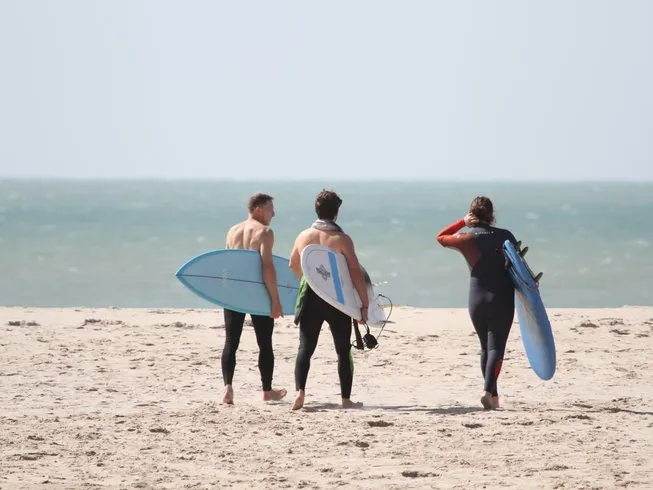
This demand incentivized operators to combine marine logistics, sports kinesiology, and high-end hospitality, establishing the modern operational frameworks that define the best luxury surf camp destinations usa.
Conceptual Frameworks and Technical Mental Models
To deliver consistent results across varying ocean conditions, premier surf academies rely on specific technical models. These frameworks move the instructional process away from vague, intuitive advice toward structured, repeatable physics.
The Hydrodynamic Planing Optimization Model
This framework looks at how a surfer’s weight distribution changes the performance characteristics of their surfboard’s planing surface relative to moving water.
-
Application: Coaches use this model to resolve stance issues. For example, a student losing speed during a turn is taught to adjust their ankle and knee angles, shifting weight to engage the board’s flatter planing zone.
-
Limitation: This model relies on consistent water density and smooth wave surfaces; choppy, wind-torn water requires rapid, intuitive changes that defy rigid structural calculations.
The Spatial Wave Zone Mapping Matrix
This model trains surfers to view a breaking wave not as a single wall of water, but as a shifting collection of distinct energy zones.
The Power Pocket
The area directly adjacent to the breaking curl, containing the highest vertical water velocity and maximum lift.
The Planing Shoulder
The flatter, unbroken section of the wave face, offering lower energy and requiring flatter board placement to maintain forward speed.
The Impact Trench
The turbulent zone where the wave lip collides with the sea floor, presenting high physical risk and requiring defensive posture adjustments.
By mastering this spatial map, students learn to position themselves in the high-energy zones of a wave, reducing the physical effort needed to maintain forward speed.
The Biomechanical Micro-Progression Framework
This model breaks down the rapid transition from paddling to standing into a series of separate, recordable motor skills.
-
Thoracic Arching Alignment: Measuring chest extension and hip grounding to maximize paddle stroke efficiency.
-
Pop-Up Transition Velocity: Minimizing the time between hand placement and foot contact to preserve forward momentum.
-
Stance Wide-Base Stabilization: Securing proper foot placement across the board’s stringer line to establish immediate balance.
This granular breakdown allows instructors to pinpoint the exact moment a physical transition fails, replacing vague advice like “stand up faster” with precise adjustments to hand or hip placement.
Key Categories and Regional Variations
The high-end surf training sector in the United States is split into distinct geographic regions and operational models. Each variation presents specific performance advantages and structural trade-offs.
Southern California Private Estate Academies
Centering around historical surf hubs like San Diego, San Clemente, and Malibu, these institutions leverage consistent groundswells and long, predictable cobblestone points.
-
Wave Attributes: Long-riding, structural waves that provide ample time for technical assessment and muscle memory training.
-
Instructional Assets: Heavy use of land-based carving skateboards, video coaching labs, and localized physical therapy support.
-
Structural Limitations: High crowd density requires strict adherence to local surf etiquette and precise, early-morning scheduling.
Hawaiian Deep-Water Coral Reef Programs
Operating on the North and South Shores of Oahu and Maui, these programs expose surfers to high-energy, volcanic coral reef environments.
-
Wave Attributes: Fast, powerful waves breaking over fixed shallow reefs, featuring deep-water channels for safer paddling access.
-
Instructional Assets: Dedicated jet ski support teams, underwater breath-hold training facilities, and professional big-wave watermen as coaches.
-
Structural Limitations: The high power of the waves requires students to meet strict baseline requirements for swimming endurance and physical fitness.
Pacific Northwest Wilderness Operations
Located along the rugged coastlines of Oregon and Vancouver Island, these camps cater to individuals prioritizing isolation, thick-wetsuit training, and wilderness navigation.
-
Wave Attributes: Heavy, cold-water beach breaks and river mouths surrounded by complex wind patterns and dense coastal forests.
-
Instructional Assets: All-terrain transport vehicles, cold-water survival training, and low client-to-instructor group sizes.
-
Structural Limitations: Extreme weather patterns and low water temperatures limit total daily training time, requiring high-intensity sessions.
Mid-Atlantic and Florida Sandbar Camps
Spanning from the Outer Banks of North Carolina down to Cocoa Beach, Florida, these schools focus on warm-water beach break dynamics.
-
Wave Attributes: Fast, changing sandbar waves that alter their shape with every major storm and seasonal tidal cycle.
-
Instructional Assets: Mobile beach tracking vehicles, drone-based aerial cameras, and flexible daily travel schedules.
-
Structural Limitations: Swell consistency is highly dependent on seasonal Atlantic weather systems, which can result in flat periods during the summer months.
Structural Comparison of Regional Training Models
Logic Framework for Selecting a Regional Asset
Choosing a high-performance training program requires an honest assessment of your current physical and technical bottlenecks. A surfer who struggles with reading wave line-ups or navigating changing water shapes will find shifting beach breaks highly valuable, as these conditions demand constant adaptation.
Conversely, an intermediate rider trying to master complex turns needs the long, clean walls of a point break, which provides the time and space required to observe and correct body positions mid-ride.
Water temperature also affects how an athlete recovers. Cold-water training forces the body to burn significant energy simply maintaining its core temperature. This reduces the total hours spent in the water each day but accelerates long-term cardiovascular endurance.
Warm-water locations allow for longer training sessions but require careful management of hydration, sun exposure, and skin protection against reef cuts.
Detailed Real-World Scenarios and Operational Realities
The following real-world operational scenarios show the complex decisions, safety systems, and adaptive strategies executed by premier surf academies daily.
Scenario 1: Managing Sudden Swell Surges on Hawaiian Reefs
An elite camp on Oahu’s North Shore is conducting an intermediate clinic when a long-period northwest groundswell arrives two hours ahead of schedule. Wave faces grow from six feet to twelve feet within forty minutes, while a strong current begins sweeping across the reef pass.
-
Operational Pivot: The head guide halts traditional paddling operations immediately. The on-site jet ski team shifts to a shuttle system, picking up surfers from the impact zone and transporting them to the deep-water channel.
-
Coaching Intervention: Once safe in the channel, the instructors use the larger waves to teach advanced lessons on identifying wave line-ups, tracking ocean horizons, and executing safe bail-out techniques.
-
Systemic Risk Avoidance: The presence of dedicated, motorized watercraft prevents a dangerous situation, turning an unexpected environmental change into a valuable lesson on open-ocean survival.
Scenario 2: Adapting to Sandbar Changes on the Atlantic Coast
A premium training camp in the Outer Banks finds its primary sandbar ruined by a sudden storm that flattens the underwater sand structures, rendering the local beach break unrideable for the rest of the week.
-
Logistical Response: The camp uses its mobile tracking infrastructure to relocate operations forty miles south, where a fishing pier has preserved a clean, rideable sandbar pattern.
-
Technical Adjustment: Coaches adjust the daily schedule to match the optimal tide window of the new location, using the transit time to conduct video reviews and analyze paddling mechanics with the guests.
-
Operational Result: By using mobile assets, the camp maintains its training schedule despite sudden environmental changes, showing why flexible logistics are essential for beach break operations.
Scenario 3: Addressing Cold-Water Fatigue in the Pacific Northwest
During an intensive camp on the cold-water reefs of Oregon, a high-performing student shows signs of mild hypothermia and cognitive fatigue during the second session of day three, refusing to exit the water due to personal competitive drive.
-
Immediate Action: The coach uses their authority to recall the student to the beach, citing the camp’s mandatory safety protocols regarding physical performance baselines.
-
Recovery Protocol: The student is placed in the camp’s on-site infrared sauna and provided with warm fluids, while biometric tracking devices monitor the recovery of their core temperature.
-
Long-Term Strategy: The instructor recalculates the student’s maximum water time for the remaining days, implementing shorter, high-intensity sessions to prevent dangerous levels of exhaustion.
Planning, Cost, and Resource Dynamics
The financial commitments required to run or attend premium surf training programs reflect the high costs of coastal real estate, specialized marine gear, and retaining experienced staff.
Understanding Resource Allocation
A significant portion of a premium camp’s tuition supports infrastructure assets that operate behind the scenes to ensure safety and quality. This includes high-liability marine insurance, state and federal coastal access permits, and continuous equipment maintenance.
Staffing costs are another major differentiator. While standard beach schools often rely on seasonal workers with basic lifeguarding skills, premier training institutions employ career watermen, certified strength specialists, and data analysts. Retaining this level of talent requires competitive, year-round salaries and ongoing professional development.
Capital Outlay Projections
The following table outlines the typical weekly cost structures associated with operating or attending a top-tier surf training academy in the United States.
Tools, Strategies, and Technical Support Systems
Elite surf training camps use an advanced selection of modern technologies to break down an athlete’s movements and accelerate skill development.
High-Speed Multi-Angle Video Telemetry
Traditional filming from a beach tripod is replaced by multi-angle, high-definition camera arrays designed to capture every detail of a surfer’s performance.
-
Land-Based Fluid Heads: Cameras shooting at 240 frames per second track the exact entry angles of a board’s rail during complex turns.
-
Overhead Drone Tracking: Aerial cameras capture the surfer’s precise position relative to the wave’s peak, mapping their path across the wave face.
-
Tail-Mounted Cameras: Board-mounted lenses record foot placement speed and deck compression during the pop-up phase.
Real-Time Two-Way Audio Communication
Coaches use specialized bone-conduction radio communication systems built into the student’s helmet. This allows instructors, positioning from a jet ski or a channel, to give immediate adjustments while the student is actively riding a wave.
This instant feedback loop cuts out the delay of waiting until a ride is finished to fix mistakes, helping students build correct muscle memory much faster.
Specialized On-Shore Recovery Labs
The physical demands of paddling and balancing in moving water require organized recovery protocols to prevent injury and maintain performance over multi-day sessions.
-
Photobiomodulation Panels: Red light therapy is used to reduce muscle inflammation in the shoulders and lower back after long water sessions.
-
Contrast Hydrotherapy Units: Alternating between custom cold plunges at 42°F and hot infrared saunas to accelerate metabolic recovery.
-
Pneumatic Compression Gear: Used during afternoon video reviews to restore circulation and reduce leg fatigue.
Risk Landscape and Failure Modes
Operating an elite surf institution involves managing an unpredictable natural environment. Because the ocean cannot be controlled, safety systems must be proactive, structural, and redundant.
Environmental Failure Modes
Sudden shifts in local weather can turn a safe training break dangerous within minutes. Key risks include unexpected wind changes, hidden rip currents, and lightning strikes.
-
Mitigation Framework: Academies monitor real-time satellite weather and marine buoy arrays. Evacuation plans are established for every break used, ensuring that students can be removed from the water quickly if conditions change.
-
Compounding Risks: Operating without motorized rescue support during a sudden wind shift can leave exhausted surfers unable to paddle back to shore, creating a severe safety hazard.
Biomechanical Injury Profiles
The physical demands of surfing—such as continuous paddling, back extension, and sudden pop-up movements—can cause acute overuse injuries if not managed correctly.
To minimize these risks, top institutions perform a comprehensive physical evaluation when guests arrive. If a student shows limited shoulder or hip mobility, their daily water time is carefully managed, and their equipment volume is increased to reduce physical strain.
Governance, Maintenance, and Long-Term Adaptation
To maintain high standards across multiple seasons, premier surf academies use strict quality control and continuous equipment maintenance schedules.
Operational Review Frameworks
Equipment maintenance cannot be left to chance; all marine and safety assets must be managed through structured schedules that track usage hours and wear.
-
Morning Weather Analysis: Every day begins with a mandatory review of local buoy data, wind projections, and tidal shifts. The coaching staff must agree on the chosen breaks based on the students’ skill levels.
-
Weekly Watercraft Audits: Jet skis, rescue sleds, and communication systems undergo a mechanical inspection every seven days, checking engine performance and hull integrity.
-
Monthly Fleet Inspections: Surfboards are checked for stress fractures, fin box stability, and deck strength. Damaged or worn boards are retired from the high-performance fleet immediately.
Pre-Launch Operational Checklist
This mandatory operational checklist must be executed by the management team before any training group leaves the staging facility.
Planning and Intelligence Phase
-
Verify local marine buoy data matches predicted swell models for the target training area.
-
Check all two-way radio channels between the watercraft, coaches, and land base.
-
Confirm all emergency medical kits are stocked with trauma supplies, spine boards, and functional AED units.
-
Review individual student physical limitation logs and medical history files before departure.
In-Water Management Phase
-
Position an experienced safety spotter on high ground or in a channel vessel before students enter the surf lineups.
-
Set clear physical boundaries using landmarks to keep students away from dangerous currents or rocks.
-
Re-assess tidal changes every thirty minutes to anticipate adjustments in wave shape and reef depth.
-
Maintain strict student-to-coach ratios: maximum two-to-one on reef breaks, and three-to-one on beach breaks.
Measurement, Tracking, and Technical Evaluation
Tracking progress in a dynamic environment like the ocean requires moving past vague feedback toward structured, measurable performance indicators.
Quantitative vs. Qualitative Indicators
Tracking an athlete’s development requires balancing clear, numbers-based data with expert observations of their movement quality.
A quantitative indicator provides clear, objective data, such as paddle speed measured in knots or pop-up speed measured in milliseconds. A qualitative indicator tracks more complex, situational skills, such as how well a surfer reads incoming swells or how calmly they handle crowded lineups. By tracking both metrics, coaches can build a complete view of a student’s progress and identify exactly where they need more support.
Digital Performance Log Systems
Elite academies maintain detailed digital training profiles for every athlete. These logs track daily wave counts, successful turn completion rates, and video timestamps showing technical improvements. This organized record ensures that when a student returns for future sessions, the coaching staff can review their history and immediately start training at the correct level.
Common Misconceptions and Oversimplifications
The high-end surf travel market contains several common myths that can confuse consumers and lead to unrealistic expectations regarding skill development.
Myth 1: Higher Pricing Guarantees Better Wave Conditions
The ocean operates on its own schedules, independent of tuition prices or premium travel packages. No surf institution can force a groundswell to arrive or stop bad winds from affecting a beach.
Myth 2: Elite Training Programs Are Only for Advanced Surfers
Many people believe that advanced training institutions are only useful for experienced surfers who want to ride large, dangerous waves.
Myth 3: Custom High-End Surfboards Are Inherently Easier to Ride
There is a common belief that using high-end, custom-shaped surfboards will instantly make a surfer better, regardless of their current skill level.
Ethical, Practical, and Local Environmental Considerations
Operating premium surf training spaces requires balancing business goals with deep respect for coastal environments and local communities.
Environmental Stewardship of Delicate Coastlines
Large-scale surf tourism can place stress on fragile coastal ecosystems. Boat operations must avoid dropping anchor on sensitive coral reefs, and land transports must stay on designated paths to protect coastal dunes from erosion.
Elite institutions build sustainability into their daily routines. This includes using solar arrays to power coaching gear, providing biodegradable wax options, and supplying reef-safe sunscreens that lack harmful chemicals like oxybenzone, protecting local marine life while training in the water.
Managing Public Lineup Dynamics
A major challenge for high-end surf camps is managing relationships with local surfing communities. Bringing large groups of visiting surfers into public breaks can cause tension if not handled with care and respect.
Premier camps handle this by operating in remote areas, training during off-peak hours, and keeping group sizes small. By hiring respected local watermen as guides and supporting regional ocean conservation efforts, these institutions build positive relationships with local communities, ensuring long-term, sustainable access to the waves for everyone.
Conclusion
The growth of professional surf academies in the United States reflects a shift away from informal, unguided practice toward structured, scientific athletic training. By combining advanced oceanography, modern tracking tools, and clear safety frameworks, the proper selection of luxury surf camp destinations usa allows athletes to develop their skills safely and efficiently.
The real value of an elite surf program is its ability to remove the logistical difficulties that often slow down an athlete’s progress. With private coastal access, instant audio coaching, and professional safety networks, surfers can focus completely on building real ocean literacy. As the demand for high-quality, structured sports travel continues to rise, these premium institutions will remain an essential resource for surfers who want to master the art and science of wave riding.